TrEnCh Project
About
Many efforts to forecast ecological responses to climate change are based on air temperatures at coarse spatial (degrees) and temporal (months) resolutions. But animals experience their environment at much finer resolution, responding to changes in environmental conditions at the scale of minutes and meters. We provide computational and visualization tools that translate air temperature into usable metrics, to improve ecological forecasting related to climate change.
Some of the tools that we offer extract fine-scale microclimate conditions from coarse-scale climate data. Others translate microclimate conditions (air and surface temperatures, radiation, wind, etc.) into animal body temperatures to calculate energy balances and thermal stress.
Our goal is to build case studies of how animals are impacted by climate change to improve our approach to climate change biology education, policy, and research.
TrEnCh is open-source (GitHub organization) and built using open source software including Bootstrap, node.js, Travis CI, Express, and R.
The TrEnCh Team
Development Team

Lauren Buckley
Project lead, UW Professor
Lauren leads the TrEnCh project and has been glad to broaden her computational skills in the process.
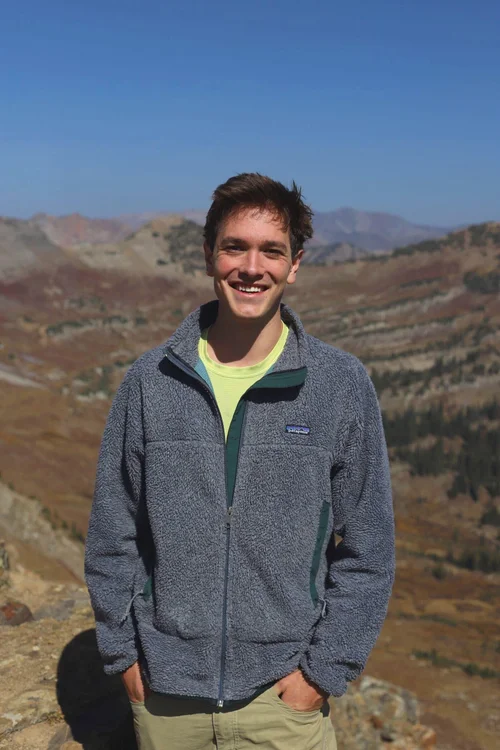
Issac Caruso
Undergraduate researcher
Lead developer of phenology visualization.

Yutaro Sakairi
Undergraduate researcher and research scientist
Contributed to TrenchR, TrenchR tutorials, and visualizations.

Abby Meyer
Research scientist
Contributed to TrenchR, TrenchR tutorials, and visualizations.

Tony Cannistra
Graduate student
Tony has assisted with many aspects of the TrEnCh Project.
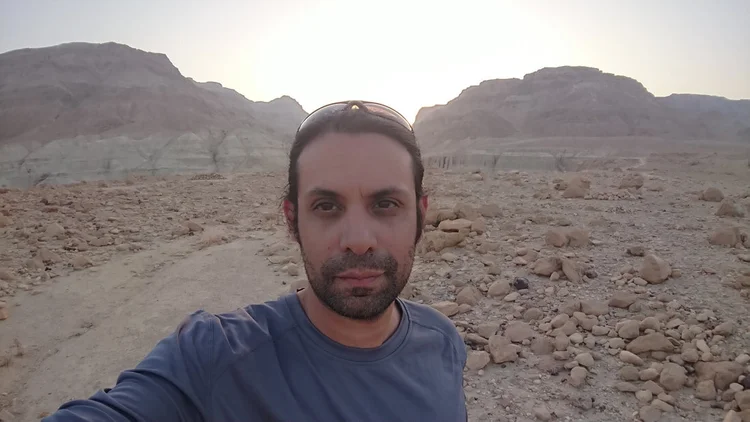
Ofir Levy
Consultant
Contributed to TrenchR.

Aji John
Research scientist
Contributed to TrenchR and visualizations.
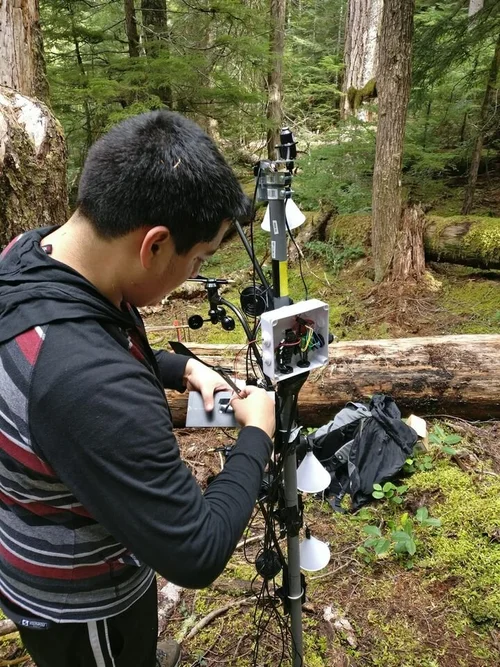
Bryan Briones Ortiz
Undergraduate researcher and research scientist
Contributed to TrenchR, TrenchR tutorials, and visualizations.
We appreciate code and other input from Bryan Helmuth and Eric Riddell.
Guidance Team
-
Joel Kingsolver, U North Carolina
Joel has advised TrEnCh-R and is a collaborator on the butterfly and grasshopper ecological and evolutionary forecasting projects.
-
Mike Kearney, U Melbourne
Mike leads the aligned NicheMapR project and has consulted or collaborated on many project components.
-
Ray Huey, U Washington
Ray has applied his thermal ecology expertise to consult on most TrEnCh project components.
Our partners
Check out the aligned Thermal Ecology Alliance.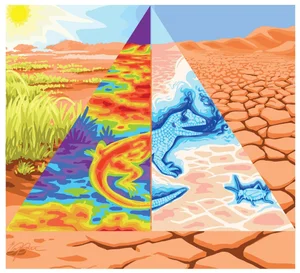
NicheMapR – an R package
Thermimage – Thermal Image Analysis
Ecological Forecasting Initiative

The PEcAn project
Broader Research Group
Find us at University of Washington Biology. Visit our lab website and GitHub site to learn about other aspects of our research investigating ecological and evolutionary responses to changing environments.
Acknowledgements
The TrEnCh project was primarily supported by a National Science Foundation (NSF) Advances in Biological Informatics CAREER grant (DBI-1349865). The TrEnCh project has also benefited from additional NSF support (EF-1065638, DEB-1120062).